A Unique Approach to Digital Currencies in Scotland
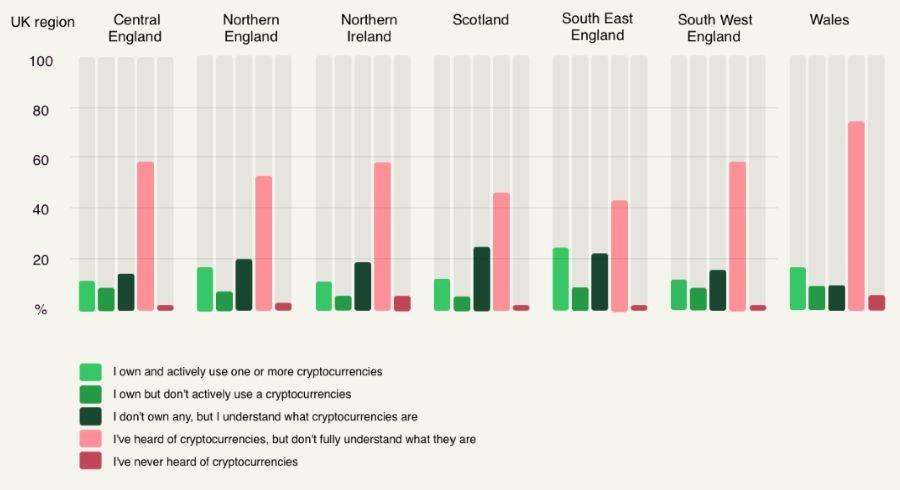
Recent research highlights a distinctive Scottish perspective on digital currencies, setting the region apart from other parts of the UK. While many areas display either a strong interest or a lack of awareness, Scotland presents a nuanced picture: a high level of understanding combined with a cautious approach. This unique blend suggests that while Scots are not entirely dismissive of crypto, they remain wary of its risks and uncertainties.
Informed Skepticism
One of the most notable findings is that Scotland leads the UK in what can be described as informed skepticism. Approximately 25% of respondents understand how cryptocurrencies work but have chosen not to invest. This represents the highest rate of deliberate non-participation in the country. Despite this, only 13% actively use digital currencies, which is lower than the national average. This indicates that knowledge does not necessarily translate into adoption, highlighting a gap between understanding and action.
Regulatory Concerns
The primary barrier to greater engagement with digital currencies appears to be regulatory uncertainty. Over half (55%) of respondents cite unclear rules as their main concern, while 53% fear losing access to their funds. These figures represent the highest rates in the UK, underscoring the significant impact of regulation on public perception.
Despite these concerns, Scots are not entirely opposed to digital currencies. Only 45% say nothing would make crypto appealing, suggesting that many are open to the idea if certain conditions are met. For 30%, improved fraud prevention measures could be a turning point in their willingness to engage with digital assets.
Lack of Awareness About CBDCs
Central Bank Digital Currencies (CBDCs) remain largely unfamiliar to most Scots. More than half (55%) have yet to hear about the shift toward digital currency, raising concerns about who is being kept informed and who might be left behind as the UK moves towards a more digital financial landscape. This lack of awareness could mean that many individuals miss out on opportunities to shape the future of money in their daily lives.
The Role of Regulation in Shaping the Future
As the Bank of England and HM Treasury explore the rollout of a state-backed digital pound, and the Financial Conduct Authority (FCA) advances regulation for crypto custody, stablecoins, and broader digital asset oversight, Scotland’s position becomes increasingly important. The nation’s pattern of high understanding without widespread adoption suggests that it is not at risk of being left behind by digital transformation. However, addressing regulatory concerns will be essential to unlock broader participation.
Experts from Aevi have noted that digital money is no longer just a niche topic but is becoming a mainstream part of everyday payments. They warn that if the rules are set before the public is even aware of the changes, there is a risk of excluding people from the system.
This research follows a recent US survey conducted by Aevi, which found similar gaps in awareness. The findings were widely covered in America after the Trump-backed GENIUS Act reignited discussions about the digital dollar.
The FCA's Consultation and Its Implications for Scotland
The FCA is currently consulting on how to regulate stablecoins and crypto custody through CP25/14 and CP25/15. These proposals are crucial for the development of a future digital pound. Scotland’s views, shaped by a strong understanding of the technology and real concerns about regulation, could play a key role in shaping consumer protections.
The consultation process will influence final regulations expected later this year, with new rules set to take effect in 2026. Given Scotland’s unique mix of high awareness and low crypto use, along with a strong focus on regulation, its feedback is particularly valuable.
However, with 55% of Scots unaware of Central Bank Digital Currencies (CBDCs), many may miss the opportunity to contribute to the development of a digital financial system that affects their daily lives. Ensuring that all voices are heard will be critical in creating a fair and inclusive digital economy.
Post a Comment for "Scots Lead in Crypto, But Edinburgh's Finance Hub Hesitates on Digital Pound"